

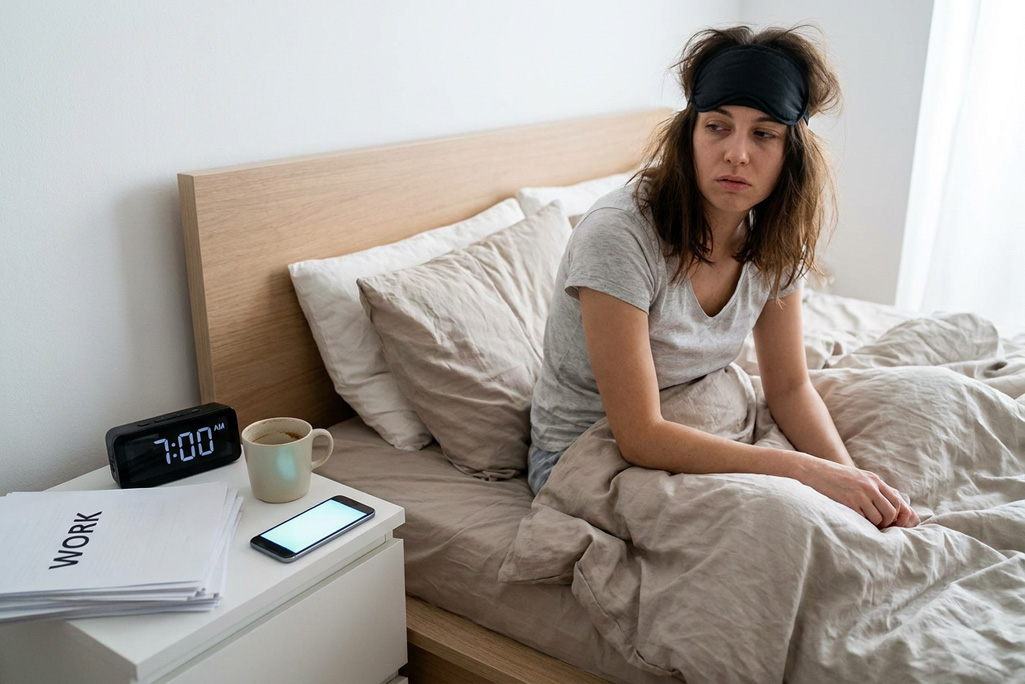
A full night in bed does not always translate into a rested morning. If you feel tired after seven hours of sleep, the first question is not simply how many hours you logged. It is whether you slept consistently, slept well, and gave your body enough time for its individual needs. Seven hours is a useful minimum for many adults, not a guarantee that everyone will wake up refreshed.
A CDC National Center for Health Statistics report published in April 2026 found that 30.5% of U.S. adults reported sleeping less than seven hours in a typical 24-hour period in 2024. Another 15.4% reported difficulty falling asleep most days or every day. These figures describe different problems: one measures duration; the other measures how readily sleep begins. Someone can spend eight hours in bed and still experience disrupted sleep. The survey cannot diagnose an individual sleep disorder, but it helps explain why counting hours alone is an incomplete measure.
Your schedule matters. A week of late nights cannot necessarily be reversed by one good night. Irregular bedtimes, shift work and early alarms may leave your internal clock out of sync with your obligations. Noise, temperature, alcohol, late caffeine and nighttime phone use can interrupt rest. Some people need closer to eight or nine hours to function at their best, even though the general adult recommendation begins at seven.
Sleep can also be fragmented by medical conditions. Loud snoring, pauses in breathing, waking while gasping, and marked daytime sleepiness deserve evaluation for sleep apnea. Persistent pain, mood conditions, medication side effects, anemia or thyroid problems may contribute to fatigue. Not every tired morning signals disease, but continuing exhaustion is a reason to ask questions rather than simply buy another supplement.
Try keeping the same wake time across weekdays and weekends. Get daylight soon after waking when possible, and make evenings less stimulating. A cool, dark, quiet bedroom can help. Move your body during the day, but experiment with exercise timing if intense late workouts leave you alert. Pay attention to caffeine in the afternoon and to alcohol that may initially make you sleepy but disrupt later sleep.
A short sleep diary can be more useful than a wearable score. Note your bedtime, estimated time asleep, awakenings, caffeine intake and how alert you feel in the morning. Look for patterns over two weeks. Consumer devices may provide clues, but they are not diagnostic tests and their sleep-stage estimates are imperfect.
Is seven hours of sleep enough for adults? For many adults, at least seven hours is the recommended starting point, but some need more. Daytime functioning, regularity and sleep quality also matter.
Why am I exhausted even when I sleep eight hours? Interrupted sleep, inadequate sleep over previous nights, apnea, stress, medications or an underlying health issue can all play a role. One symptom alone cannot identify the cause.
When should I seek help? Contact a clinician if fatigue persists, affects driving or work, or comes with loud snoring or breathing pauses. Seek urgent care for alarming symptoms such as severe breathing trouble or chest pain. The goal is not to achieve a perfect sleep-tracker score. It is to understand your personal sleep pattern and make changes that improve how you actually feel throughout the day.